SERMON | Roots

B-sides

Psalm 1 NRSV

Happy are those
who do not follow the advice of the wicked
or take the path that sinners tread
or sit in the seat of scoffers,
2 but their delight is in the law/Torah of the Lord,
and on his law they meditate day and night.
3 They are like trees
planted by streams of water,
which yield their fruit in its season,
and their leaves do not wither.
In all that they do, they prosper.

The wicked are not so
but are like chaff that the wind drives away.
5 Therefore the wicked will not stand in the judgment
nor sinners in the congregation of the righteous,
6 for the Lord watches over the way of the righteous,
but the way of the wicked will perish.

Questions

  1. What’s your favorite type of tree and why?

  2. Are there any parts of the Bible that you don’t feel help root you? Are there parts of the Bible that you wish didn’t exist?

  3. What parts do you root yourself to? Are there any particular verses you have leaned on in a time of tumult?

  4. What beyond the bible are you rooted in? Your family? Your church? Your community? What else?

  5. When in your life have you found yourself held up by the roots of others?

  6. Have you ever grown too fast without good roots? What was that like?

DTC
SERMON | SEEDS

Sermon Title: Seeds

Scripture: Matthew 13:31-32

31 He told them another parable: “The kingdom of heaven is like a mustard seed, which a man took and planted in his field. 32 Though it is the smallest of all seeds, yet when it grows, it is the largest of garden plants and becomes a tree, so that the birds come and perch in its branches.”

Questions

  1. Do you have a favorite type of tree or fond memory related to a tree that you can think of

  2. Have you ever tried to plant a tree or any type of greenery? What was that experience like?

  3. What do you think “the Kingdom of Heaven” means? What does that look like to you? Are there any issues in calling it a kingdom? What metaphor would you rather use?

  4. Lucas talks about the metaphorical seeds that have been planted in various stories. Can you think of any seeds you have had experienced, planted, or seen?

  5. Why do you think Jesus speaks to his disciples in parables?

  6. What opportunities exist for us individually and communally to plant seeds in the hopes of Gods coming kingdom?

Prayer

Read this quote as a closing prayer:

What you do in the Lord is not in vain. You are not oiling the wheels of a machine that’s about to roll over a cliff. You are not restoring a great painting that’s shortly going to be thrown on the fire. You are not planting roses in a garden that’s about to be dug up. You are—strange though it may seem, almost as hard to believe as the resurrection itself—accomplishing something that will become part of God’s new world. Every act of love, gratitude, and kindness. Every work of art or music inspired by the love of God and delight in the beauty of creation; every minute spent teaching a child to read or walk; every act of care and nurture, of comfort and support, every deed that spreads the gospel, builds up the church, embraces and embodies holiness rather corruption and makes Jesus’ name honored—all of this will find its way into the new creation that God will make.


-N.T. Wright,  Surprised by Hope: Rethinking Heaven, the Resurrection, and the Mission of the Church

DTC
SERMON | Enrolling in the school of suffering

B-SIDES

Sermon Title: Enrolling in the School of Suffering

Scripture: Romans 5:1-5

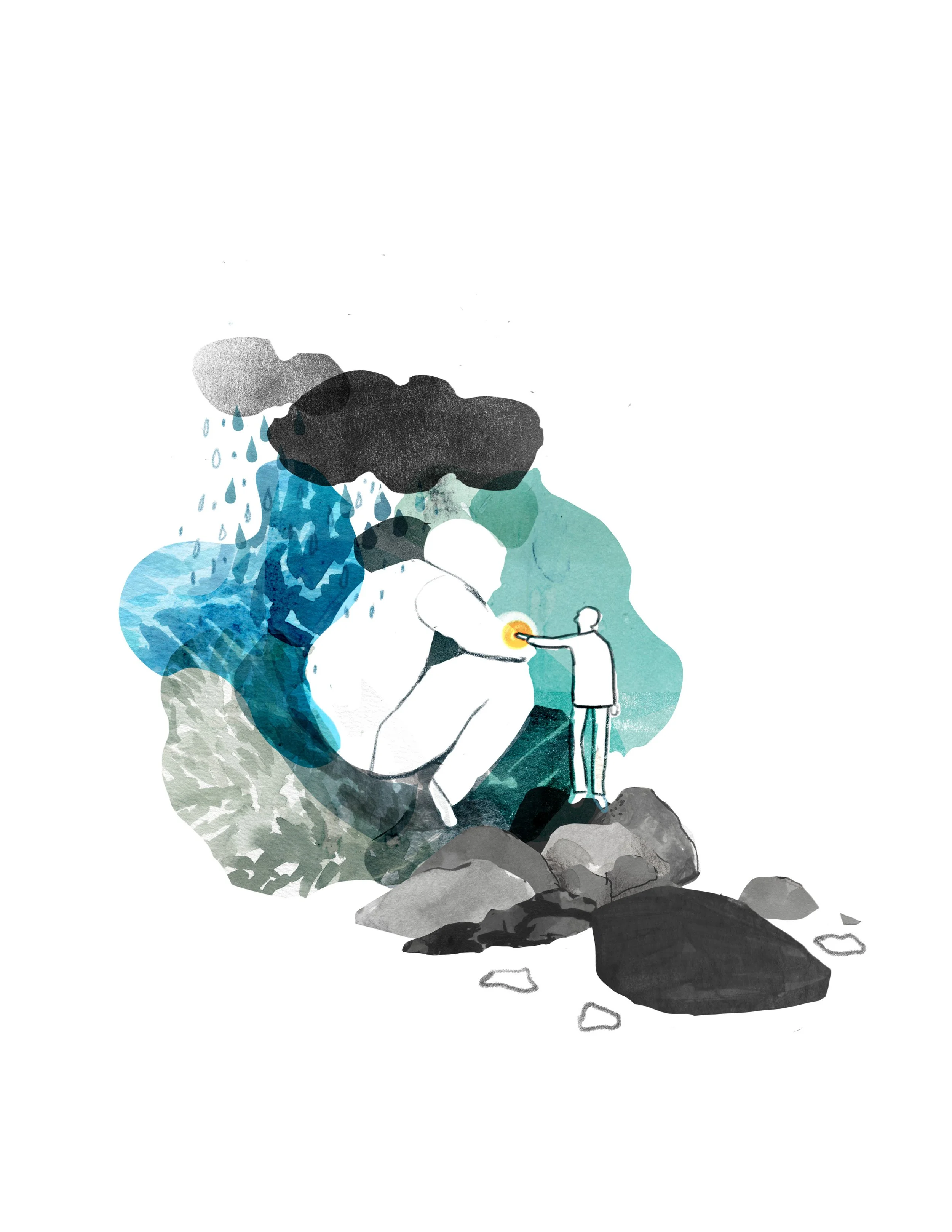
Therefore, since we are justified by faith, we[a] have peace with God through our Lord Jesus Christ, through whom we have obtained access[b] to this grace in which we stand, and we[c] boast in our hope of sharing the glory of God. And not only that, but we[d] also boast in our afflictions, knowing that affliction produces endurance, and endurance produces character, and character produces hope, and hope does not put us to shame, because God’s love has been poured into our hearts through the Holy Spirit that has been given to us.

Questions

  1. How would you define “suffering?”

  2. Tom mentioned in his message that we don’t really “enroll” in the school of suffering. We don’t have a choice. Sometimes, suffering just comes our way and life enrolls us. Think of a time in your life when you were in the school of suffering. What did you learn in that time of suffering that you think could help someone else? ( About God? About Yourself? About your friends? About suffering itself? About something else?)

  3. Were you surprised at who reached out to you in that time of suffering and who did not? Without focusing on the names of those who did and who did not reach out, reflect on why you think that some people reached out and others did not?

  4. What was most helpful to you in your time of suffering to get through it?

  5. Do you reach out to others in the school of suffering or are you reluctant to do it? If so, what stops you from reaching out to someone who is in a time of suffering?

  6. Tom told a story of two men (Don and John) who comforted one another in their time of suffering. Do you have a community of “ fellow sufferers” you can count on to help you in your times of need?

  7. What role does the church play in our suffering?

Prayer

God, comfort us when we suffer. And spur us from our places of apathy to comfort each other. In your son Jesus’ name we pray, Amen. 

DTC